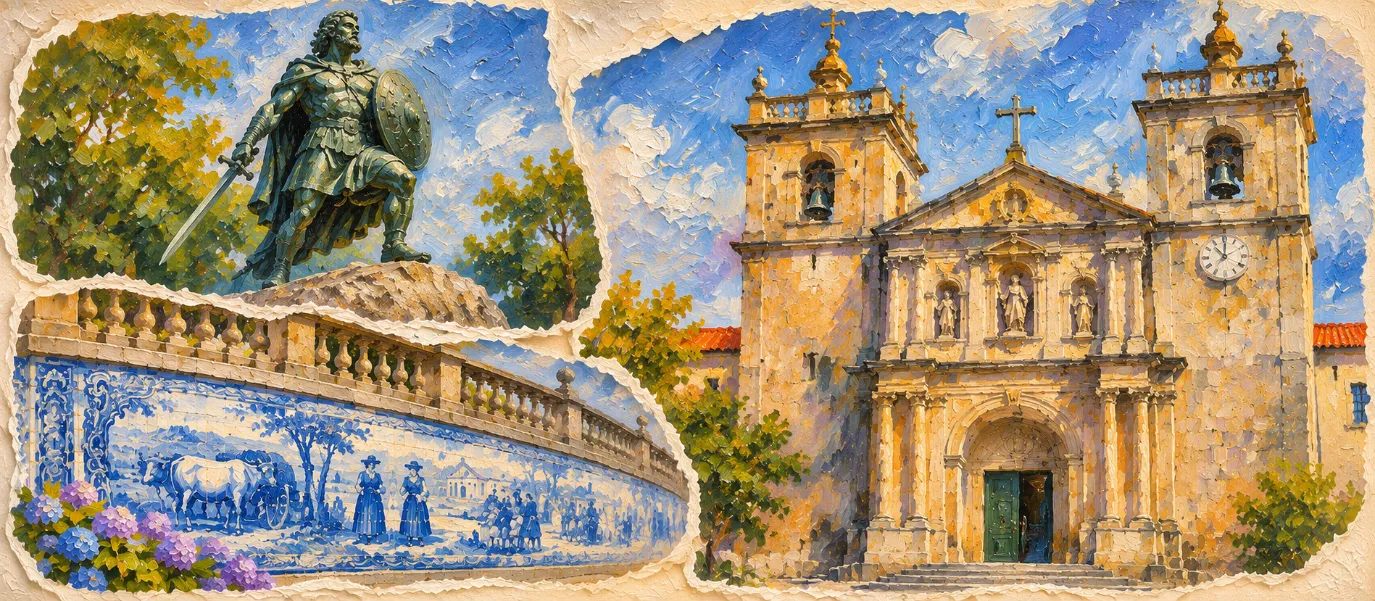
Discover how local traditions connect generations, preserve cultural identity, and continue to shape everyday life in Viseu.
The Connection Between Past and Present
Every community has traditions that help define its identity.
Some are celebrated through festivals, music, and public gatherings. Others are found in everyday routines, family recipes, craftsmanship, and customs passed from one generation to the next.
These traditions offer more than a connection to the past. They help people understand where they come from, what their communities value, and how shared experiences contribute to a sense of belonging.
In Viseu, local traditions remain an important part of the region’s cultural landscape, connecting its history with contemporary life.
More Than Celebrations
When people think about cultural traditions, festivals and public celebrations often come to mind.
Events such as Viseu’s historic Feira de São Mateus demonstrate how longstanding customs can continue to bring people together.
Yet traditions are not limited to major occasions.
They can be found in the preparation of regional dishes, the skills of local artisans, religious and community celebrations, and the familiar routines that shape everyday life.
These smaller expressions of culture may receive less attention, but they can be equally important in preserving a community’s distinctive character.
Keeping Knowledge Alive
Many traditions depend on knowledge being shared between generations.
A craftsperson may teach techniques learned from an experienced mentor. A family recipe may be passed down through years of shared meals. Local musicians and performers may introduce younger audiences to forms of expression that have been part of their communities for decades.
Without opportunities to share this knowledge, some traditions can gradually disappear.
Preserving them does not necessarily mean resisting change.
It can mean documenting their history, supporting the people who practice them, and creating opportunities for new generations to understand and appreciate their significance.
Tradition and Modern Life
Culture is never entirely static.
As communities change, their traditions often evolve alongside them.
Contemporary artists may reinterpret traditional designs. Chefs may introduce new approaches to regional recipes. Festivals may incorporate modern performances while retaining their historical character.
These developments demonstrate that cultural traditions can remain relevant without being preserved exactly as they existed in the past.
The relationship between tradition and innovation can create new opportunities for creativity while maintaining a connection to local identity.
A Way to Connect with the Community
For newcomers to Viseu, discovering local traditions can provide a valuable introduction to the region’s history and everyday culture.
Attending a community celebration, visiting a traditional market, or learning about a local craft can offer opportunities to meet people and better understand their experiences.
For longtime residents, these same activities may strengthen familiar connections and encourage renewed appreciation for customs that have become part of everyday life.
Shared cultural experiences can help bridge differences in age, background, and nationality.
They provide common ground through which people can develop a stronger sense of connection to the place where they live.
Preserving Character While Embracing Change
A city’s identity is shaped by more than its buildings, businesses, and public spaces.
It also depends on the knowledge, memories, customs, and creative expressions of the people who live there.
Local traditions contribute to that identity by preserving connections between generations while offering opportunities for cultural exchange.
As Viseu continues to develop, these traditions can remain an important part of what makes the region distinctive.
Through inViseu, we hope to explore the people, experiences, and customs that contribute to this cultural heritage.
Because understanding a place involves more than discovering what it offers today. It also means appreciating the stories and traditions that helped make it what it is.